




Homeownership is often described as the American Dream, but without a proactive strategy, that dream can quickly morph into a financial drain. The true cost of a house isn’t the mortgage—it’s the cumulative expense of everything that happens after you get the keys. Most homeowners approach repairs with a “break-fix” mentality: they wait for a ceiling to leak or a furnace to quit before acting.
However, the most financially savvy individuals view their property through the lens of asset management. By shifting from reactive repairs to strategic maintenance and high-ROI renovations, you don’t just save money on emergency bills; you preserve the structural integrity of your largest investment and ensure its value outpaces inflation. This guide explores how to master your home’s systems to ensure that every dollar spent today saves ten dollars tomorrow.
Mastering the Core Systems

The most destructive force in any home is uncontrolled water. Whether it’s a slow drip behind a vanity or a failing pressure tank in a basement, moisture is the primary catalyst for rot, mold, and foundation instability. Addressing these issues early is the hallmark of a disciplined homeowner.
While many people feel comfortable swapping out a showerhead, the underlying infrastructure often requires professional oversight. Utilizing expert plumbing services for an annual “whole-house health check” can reveal pinhole leaks in copper pipes or early signs of corrosion in PEX manifolds that the untrained eye would miss. These small interventions prevent the catastrophic water damage that leads to five-figure insurance claims.
For those living in rural or semi-rural areas, the complexity of water management increases. Maintaining water wells is an essential long-term savings strategy. Neglecting the pump or the casing can lead to sediment buildup that destroys appliances or, worse, requires the drilling of a new shaft.
Actionable Strategies for Water Management:
- Monitor the Water Meter: Periodically turn off every faucet and appliance in the house. If the meter is still spinning, you have a silent leak.
- Standardize Shut-off Valves: Replace old “gate valves” with “ball valves.” Gate valves often seize over time, making it impossible to stop a flood in an emergency.
- Water Heater Longevity: Drain your water heater annually to remove sediment. This simple 20-minute task can double the lifespan of the unit.
- Sump Pump Redundancy: If you have a basement, install a battery-backup sump pump. Mechanical failure during a storm is a leading cause of flooded basements.
Efficiency as a Financial Asset
Your HVAC system is likely the most expensive mechanical component of your home. It is also the one that consumers tend to ignore until it fails on the hottest or coldest day of the year. The financial impact of a neglected system is twofold: increased monthly energy consumption and a significantly shortened equipment lifespan.
When the temperature drops, the efficiency of your heating equipment determines your winter “tax.” A furnace with a cracked heat exchanger or a soot-clogged burner has to work twice as hard to produce the same BTU output. Regular tuning ensures that fuel is converted to heat with minimal waste, keeping your monthly overhead low and delaying the need for a full system replacement.
Summer brings its own set of challenges. Most air conditioning repairs are caused by two simple culprits: dirty coils and low refrigerant. When a system struggles to breathe because of dust or debris, the compressor—the heart of the AC—overheats and eventually burns out. Replacing a capacitor or cleaning a coil costs a fraction of what a new compressor or a full condenser unit would.
High-Efficiency Maintenance Tips:
- Filter Discipline: Change your HVAC filters every 30 to 90 days. A clogged filter is the number one cause of mechanical strain.
- Clear the Perimeter: Keep at least two feet of clearance around your outdoor unit. Overgrown shrubs restrict airflow and force the motor to run hotter.
- Smart Thermostats: Program your home to be 5 to 7 degrees warmer or cooler when you are away. This reduces the “cycle count,” which is what wears out mechanical parts.
- Duct Sealing: Use mastic sealant or foil tape on visible duct joints in the attic or basement. Leaky ducts can waste up to 30% of your conditioned air.
Sealing the Perimeter
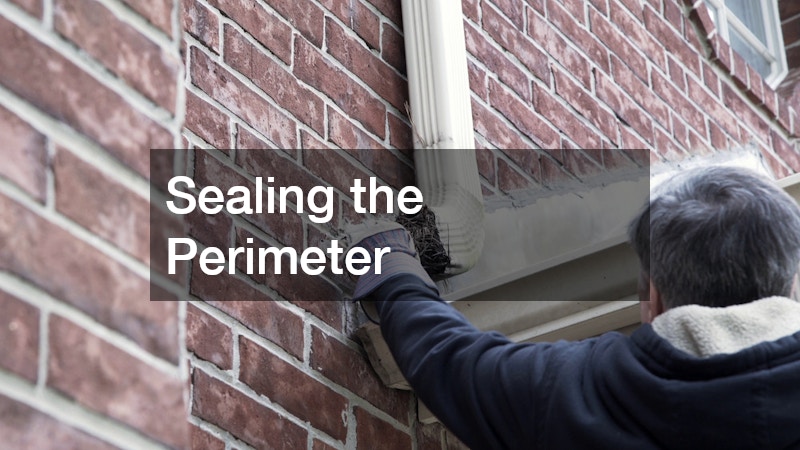
If the HVAC is the lungs of the home, the “envelope”—the windows, doors, roof, and siding—is the skin. A breach in the skin leads to energy loss and structural decay. Many homeowners hesitate at the cost of exterior upgrades, but these are among the few projects that offer a nearly 1:1 return on investment by protecting the home’s bones.
Old, drafty windows are a major source of thermal transfer. While weatherstripping can help, there comes a point where the seal of a double-pane unit fails, leading to “fogging” and a total loss of insulating properties. Investing in window replacement is a long-term play. Modern units with Low-E glass coatings reflect infrared light, keeping heat inside during winter and outside during summer.
Protecting the exterior also means managing the transition points where different materials meet. This is where most leaks occur.
Exterior Preservation Checklist:
- Gutter Integrity: Clean gutters twice a year. Clogged gutters lead to “ice damming” in the winter and foundation erosion in the summer.
- Caulking and Sealing: Walk the perimeter of your home annually. If you see cracks in the caulk around windows or doors, scrape and replace it to prevent water from getting behind the siding.
- Roof Inspection: After a major storm, use binoculars to check for missing or lifted shingles. Catching a single missing shingle today prevents a rotted roof deck next year.
- Paint as Protection: Paint isn’t just for aesthetics; it’s a sacrificial layer that protects wood from UV damage and moisture. Don’t wait for it to peel before recoating.
High-Value Functional Upgrades
The kitchen is often cited as the room that sells a house. From a maintenance perspective, it is also the room with the highest density of appliances and plumbing connections. When homeowners consider kitchen remodeling, they often focus on cabinet colors or backsplash tiles, but the real “long-run” savings come from upgrading the hidden infrastructure.
Modern appliances are significantly more energy-efficient than those from even a decade ago, but they are also more sensitive to water quality. If you have hard water or sediment issues, your high-end dishwasher and refrigerator will fail prematurely. Integrating a professional water repair service to install a whole-home filtration or softening system protects these expensive assets from scale buildup.
Smart Kitchen Decisions:
- Timeless Materials: Opt for quartz or granite over laminate. These materials are nearly indestructible and don’t require the constant sealing that marble or butcher block might.
- LED Conversion: Swap all under-cabinet and overhead lighting to LED. The heat reduction alone helps preserve the finish on your cabinetry.
- Shut-off Accessibility: Ensure every appliance has an easy-to-reach shut-off valve. If a dishwasher hose bursts, you need to be able to stop the flow in seconds, not minutes.
- Ventilation: Install a high-quality range hood that vents to the outside. This removes grease particles from the air that would otherwise settle on your cabinets and degrade the finish.
Preventing Hidden Decay
Bathrooms are the most common site of “silent” home damage. Because water is used so frequently in such a small space, even a tiny failure in a grout line or a wax ring can lead to thousands of dollars in subfloor damage.
When planning a bathroom remodeling project, the focus should be on “wet-room” integrity. This means using modern waterproofing membranes rather than just “green board” drywall. Selecting the right bathroom contractors is crucial here; you want a team that prioritizes what’s behind the tile over how the tile looks. A beautiful shower that leaks into the kitchen below after two years is a failure of investment.
Preventing Bathroom Disasters:
- Regrouting and Recaulking: As soon as you see cracks in the corner of your shower or around the tub, fix them. This is the primary entry point for water into your wall studs.
- Fan Power: If your bathroom mirror is still foggy ten minutes after a shower, your exhaust fan is inadequate. High humidity leads to mold and peeling paint.
- Toilet Seals: If a toilet wiggles even slightly, the wax ring seal is likely compromised. Pulling the toilet and replacing the $10 ring can save a $2,000 subfloor repair.
- Low-Flow, High-Performance: Upgrade to modern low-flow toilets. They save thousands of gallons of water per year and have much better flushing mechanisms than the first generation of “green” toilets.
Safety and Modern Demands

Most homeowners never think about their electrical system unless a breaker trips. However, our homes now draw significantly more power than they did thirty years ago. Overloaded circuits aren’t just an inconvenience; they are a fire hazard.
Engaging professional electrical services is a vital step in “future-proofing” your home. An older 100-amp panel may struggle to support modern luxuries like electric vehicle chargers, heat pump water heaters, or high-end kitchen appliances. Upgrading to a 200-amp service and ensuring your home is properly grounded protects your expensive electronics from power surges and reduces the risk of electrical fires.
Electrical Safety and Savings:
- Surge Protection: Install a whole-house surge protector at the main panel. This protects every appliance—from your fridge to your smart TV—from external power spikes.
- GFCI Protection: Ensure all outlets in “wet” areas (kitchens, bathrooms, garages) are GFCI-protected. This is a basic safety requirement that prevents lethal shocks.
- Identify Hot Spots: If a wall switch or outlet feels warm to the touch, it indicates a loose wire or an overloaded circuit. This should be addressed immediately.
- Smart Panels: Consider a “smart” electrical panel that allows you to monitor energy usage by circuit, helping you identify which appliances are “vampires” sucking power unnecessarily.
Budgeting for the Unavoidable
A common mistake is treating home repairs as “emergencies” rather than “operating expenses.” If you own a $400,000 home, you should expect to spend roughly $4,000 a year on maintenance and repairs. Some years you will only spend $500 on filters and paint; other years you will spend $15,000 on a roof.
The “1% Rule” of home maintenance suggests setting aside 1% of the home’s purchase price annually in a dedicated high-yield savings account. This “Home Reserve Fund” ensures that when a major system requires attention, you can afford to do the repair correctly rather than opting for a cheap “band-aid” fix that will cost more to undo later.
How to Prioritize Projects:
- Safety First: Electrical hazards, gas leaks, and structural instability take top priority.
- The Envelope: If the roof or windows are failing, nothing else matters because the interior will eventually be ruined.
- Mechanical Systems: Efficiency and comfort upgrades (HVAC and Plumbing).
- Aesthetics and Lifestyle: Kitchen and bathroom cosmetics come last, as they don’t protect the home’s structure.
The Philosophy of the “Forever Home”

Even if you plan to move in five years, you should maintain your house as if you intend to stay for fifty. The “Long Run” in homeownership refers to two distinct outcomes: the daily quality of life you experience while living there, and the final check you receive at the closing table when you sell.
A well-maintained home sells faster and for a higher price because the “bones” are solid. Buyers can smell neglect; they see the water stains on the ceiling, the peeling paint on the trim, and the 20-year-old furnace, and they immediately begin deducting thousands from their offer. Conversely, a homeowner who can produce a binder full of maintenance records and receipts for proactive upgrades commands a premium.
Ultimately, home maintenance is about control. You can choose to spend a small, predictable amount of money and time each month to keep your systems running perfectly, or you can wait for the house to choose the time and the price of the repair for you. By choosing the former, you turn your home from a source of stress into a true engine of wealth and a sanctuary of comfort. The secret to saving in the long run isn’t finding a “cheap” fix—it’s ensuring you never need one.